Scaling Recipes: A Bakery Secret
Have you ever attempted to double a beloved cookie recipe for a large party, only to pull a tray of flattened, greasy puddles from the oven? In the world of professional pastry, inconsistency is the ultimate sin. At Fresh 2 Plate, uncovering high-level Bakery Secrets reveals that the root cause of these spectacular failures is not the oven temperature or the quality of the seasonal ingredients; it is the fundamental mathematical approach to the recipe itself. Relying on volumetric measurements—cups and tablespoons—is a severely flawed system that virtually guarantees varied, unpredictable results when multiplying a batch. To consistently produce a Heavenly Delicacy, whether formulating one loaf of bread or one hundred, you must adopt the universal language of the professional kitchen: Baker’s Percentages. While abandoning your familiar measuring cups for a digital scale might initially feel intimidating, this profound shift drastically clarifies the science of quick recipes and integrates flawlessly into your routine of preparing healthy meals. Let’s systematically demystify the math and uncover how scaling truly operates.
1. The Tyranny of the Measuring Cup
Volumetric measurements measure the physical space an ingredient occupies, not its actual mass. This creates immense volatility.
- The Flour Factor: A “cup” of flour can weigh anywhere from 120 grams (if lightly spooned and leveled) to 160 grams (if scooped aggressively directly from the bag). If you double a recipe calling for three cups of flour using the aggressive scoop method, you could inadvertently add almost an entire extra cup of flour by weight. Your cake will be bone dry.
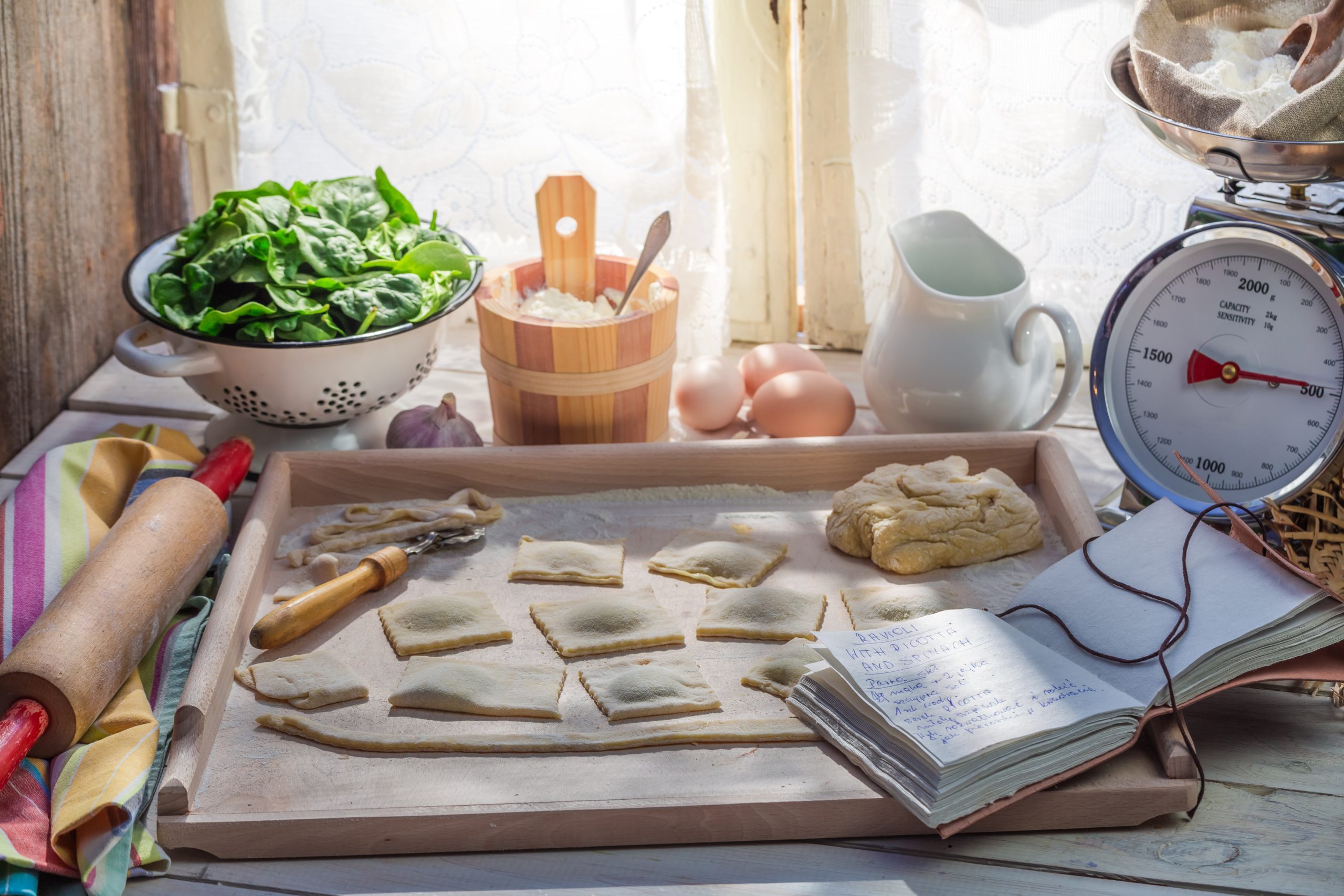
- The Solution: The Digital Scale. Professional bakers measure absolutely everything—including liquids like water and eggs—by weight in grams. Grams offer an objective, undeniable measurement. 100 grams of flour is exactly 100 grams, regardless of how aggressively it is packed or how humid the kitchen is.
Pro Tip: When purchasing a kitchen scale, ensure it has a “tare” (zero) function. This allows you to place your mixing bowl on the scale, zero the weight, add your flour, hit zero again, add your sugar, and so forth, minimizing the number of dirty dishes dramatically!
Nutritional Note: Measuring by weight is the most accurate method for tracking exact caloric and macronutrient intake. If you are meticulously planning your healthy meals, a digital scale eliminates the massive discrepancies inherent in measuring a “tablespoon” of peanut butter.
2. Understanding Baker’s Percentages
Baker’s math does not calculate percentages based on the total weight of the final dough. Instead, it calculates everything relative to the total weight of the flour.
- The Anchor: In baker’s math, the total weight of the flour in the recipe is always, unequivocally, 100%. If a recipe utilizes a blend of flours (e.g., 800g bread flour and 200g whole wheat flour), the total flour weight is 1000g, which acts as the 100% anchor.
- The Ratios: Every other ingredient is expressed as a percentage of that total flour weight. For example, if a bread recipe calls for “70% hydration,” it means the weight of the water equals 70% of the weight of the flour. If you have 1000g of flour, you need exactly 700g of water.
- The Salt: Standard bread requires 2% salt. Therefore, for our 1000g of flour, we require precisely 20g of salt. It is perfectly consistent scaling, regardless of the batch size.
Troubleshooting: Do not confuse baker’s percentages with conventional percentages. If you add up the percentages in a baker’s formula, they will always exceed 100% (e.g., Flour 100% + Water 70% + Salt 2% + Yeast 1% = 173% Total Dough Weight). This is entirely correct and standard.
3. The Power of Infinite Scaling
Once a recipe is converted into baker’s percentages, it becomes completely elastic and indestructible.
- Scaling Down: Imagine a brilliant recipe that makes 20 loaves of bread, but you only want to bake one loaf for a modest addition to your healthy meals repertoire. If you know the formula requires 75% water, 2% salt, and 1% yeast, you simply decide you want to use 500g of flour as your base (100%), and calculate the rest effortlessly (375g water, 10g salt, 5g yeast).
- Ingredient Hydration: Understanding percentages allows you to predict the physical nature of the dough before you even mix it. You intellectually know that a dough with 60% hydration will be stiff and deeply workable (like a bagel), while a dough pushing 85% hydration will be a wet, sticky, sloppy mess requiring extensive folding (like Ciabatta).
More Internal Inspiration on Technique
Want to understand how high-hydration dough behaves during the bake? Read our deep dive on Understanding the Maillard Reaction in Baking. Do you need help mastering the intense mathematical requirements of delicate French pastry? Revisit our Macaron Troubleshooting Guide.
Conclusion
Embracing a digital kitchen scale and translating your favorite formulas into baker’s percentages elevates your culinary prowess from an enthusiastic amateur to a confident professional. By eradicating the gross inaccuracies of volumetric cups, you guarantee that your Heavenly Delicacy performs perfectly every single time, whether you are crafting an intimate tray of cookies or a massive wedding cake. This fundamental Bakery Secret strips away the mysticism of baking, leaving behind pure, reliable science. It is the ultimate tool for executing quick recipes accurately alongside precision-driven healthy meals. Purchase a digital scale this week, convert your grandmother’s legendary seasonal ingredient pound cake recipe into percentages, and never suffer a flattened, greasy failure again!